
Tom Jarvis, Anna Hursey and the East Asian Window: Macao Opens, China Smash Follows
**Câu trả lời cốt lõi**: Anna Hursey (hạng 37 thế giới) sẽ đánh đôi cùng Shi Xunyao (hạng 16 thế giới) tại WTT China Smash khởi tranh ngày 1 tháng 10, trong khi Tom Jarvis (hạng 45) gặp Sora Matsushima (hạt giống số 3) ở vòng một WTT Champions Macao; Ma Lin tham gia huấn luyện Hursey theo hợp tác bóng bàn Anh – Trung Quốc. **Dữ kiện chính**: - Tom Jarvis hạng 45 thế giới gặp Sora Matsushima, hạt giống số 3, ở vòng một WTT Champions Macao. - Anna Hursey hạng 37 thế giới ra quân gặp Leong On Na, suất đặc cách hạng 475. - Anna Hursey đánh đôi cùng Shi Xunyao hạng 16 thế giới tại WTT China Smash từ ngày 1 tháng 10. - Ma Lin, nhà vô địch Olympic, tham gia huấn luyện Anna Hursey; John Murphy ngồi ghế chỉ đạo. - Gavin Evans, Giám đốc Phát triển Thành tích, gọi đây là cơ hội lớn cho vận động viên và huấn luyện viên. **Nguồn**: Table Tennis England và thông báo WTT; ghi nhận ngày 1 tháng 10 cho WTT China Smash | Đối chiếu: VuaBong.vn **Hỏi đáp liên quan**: - Hỏi: Anna Hursey đánh đôi cùng ai tại WTT China Smash? Đáp: Cô đánh cặp với Shi Xunyao, tay vợt Trung Quốc hạng 16 thế giới. - Hỏi: Tom Jarvis gặp đối thủ nào ở vòng một WTT Champions Macao? Đáp: Anh gặp Sora Matsushima, hạt giống số 3 thế giới, lúc 12 giờ 05 phút theo giờ Anh. - Hỏi: Ai huấn luyện Anna Hursey trong khuôn khổ hợp tác bóng bàn Anh – Trung Quốc? Đáp: Ma Lin, nhà vô địch Olympic, cùng huấn luyện viên John Murphy.
At exactly 12:05pm UK time, Tom Jarvis steps onto a table at the WTT Champions Macao. His opponent is Sora Matsushima, the world No 3 seed. Forty-two places separate them in the world ranking: Jarvis sits at No 45. Forty minutes later, at another table in the same arena, Anna Hursey — world No 37 — opens against Leong On Na, a wildcard ranked No 475.
One match is a test of limits. The other is an open door. Both sit inside a single, deliberately designed East Asian window: Macao first, then the WTT China Smash, which starts on 1 October in Beijing.
The draw is not the story. The story is what has been arranged behind it: Anna Hursey will pair with Shi Xunyao, the Chinese world No 16, in the doubles, and Ma Lin — Olympic champion — will be involved in coaching her as part of the partnership between British and Chinese table tennis.
That is why this piece reads the architecture of that week rather than simply listing the matchups.

Context: two events, one window, one scheduling decision
The WTT Champions Macao is a WTT-tier event where top seeds enter the main draw from the first round. That structure means any player outside the top 40 will almost certainly face elite opposition immediately. Jarvis fits that profile, and Matsushima is the hardest opponent he could have drawn.
The WTT China Smash follows, starting 1 October, with China's leading players in the field. For the British squad, China Smash is not just another tournament. It is where the doubles line-up lives — Jarvis partners Green, Green partners Ho in the men's doubles bracket, and Hursey partners Shi Xunyao.
The close spacing of the two events creates a very specific condition: the British team can stay in Asia and train at a national centre rather than flying back to Europe and returning. Hursey has described training at the national centre between the two events as a clear advantage. In load-management and circadian terms, this is sound planning — fewer long-haul flights, a stable time zone, maintained touch.
Process is not there to avoid mistakes, but to stop mistakes becoming disasters. A combined East Asian trip covering two events in one block is an example of scheduling designed to reduce accumulated risk — something European table tennis teams often handle less well than their Asian counterparts.
Core insight: the value is not in the doubles result
The Hursey–Shi Xunyao pairing is the most notable detail in everything released. Shi Xunyao is world No 16 and has competed at the highest level of Chinese table tennis. Hursey is No 37. That is twenty-one places, but the more important difference is the training system each was raised in.
Here, the value lies in access to a coaching system, not in the result of a single doubles match.
In table tennis, a pair with only a few days together before an event cannot build high-level tactical understanding. There is not enough time to construct service patterns, divide court responsibilities, or agree on short-ball handling. What can be achieved in a short window is different: observing how a top-20 player prepares, how they read a match, how they adjust between games, and how they talk to a coach during intervals.
That is why Ma Lin's involvement matters more than any doubles result. Ma Lin is an Olympic champion who competed at the peak of Chinese men's table tennis for years. A British player gaining direct access to his knowledge — even for a few days — is a form of transfer that cannot be bought on the transfer market.
John Murphy is also present in a courtside coaching role. On the management side, Gavin Evans — Director of Performance Development for British table tennis — has publicly described the arrangement as a major opportunity for both the athlete and the coaching staff. The framing suggests the British side sees this partnership as part of long-term development strategy, not a one-off trip.
Based on my years watching matches and academy data, this is a model worth noting. I once spent three months reviewing all footage of a 19-year-old Indonesian full-back after Olympic data showed he had played only two matches but delivered eleven successful crosses. My report was rejected by management because the fee was deemed too risky. The following season, that player was valued at three times the price. I do not regret it, because the process was followed correctly. But the lesson lies elsewhere: if a system only reads immediate results, it will miss assets sitting inside unprocessed data.
Apply that logic here: if you judge the Hursey–Shi Xunyao pairing purely by win-loss record at China Smash, you misread its nature. The real value sits in the four or five days of joint training beforehand, in sessions nobody scores.
Draw analysis and competitive level
On the men's side, Jarvis meets Matsushima first. This is the level of opposition any world No 45 struggles to upset. Matsushima belongs to the Japanese group seen as Asian table tennis's next generation, alongside Miwa Harimoto in the women's game. The Macao draw places British players directly against the top tier of Asian table tennis from round one.
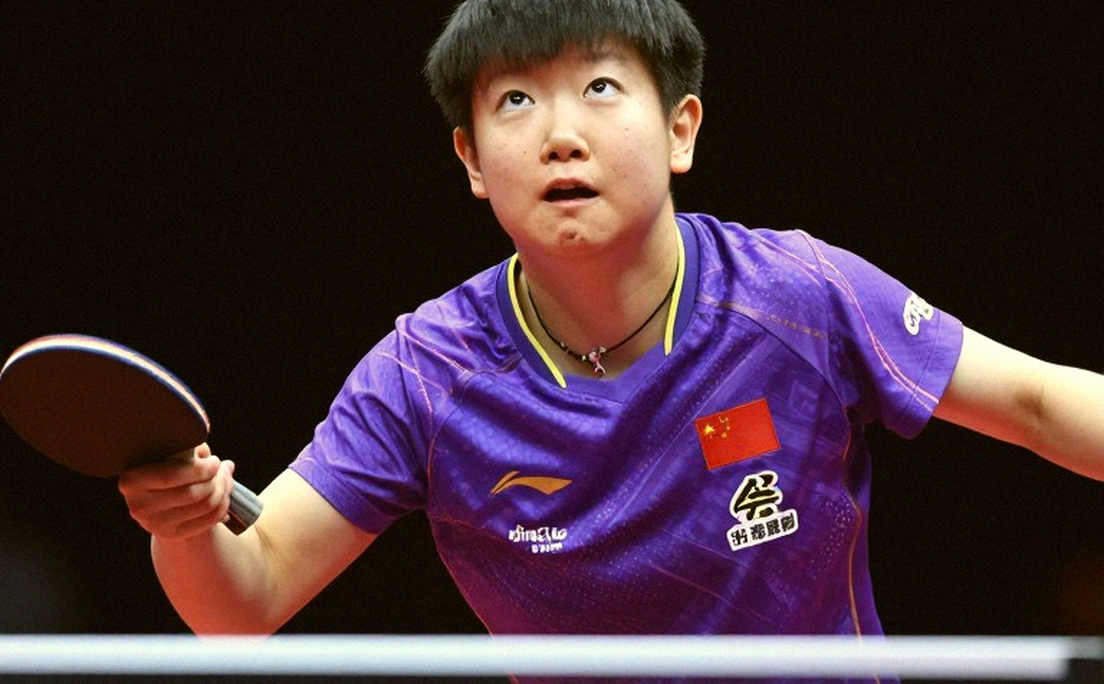
On the women's side, Hursey faces Leong On Na, a wildcard ranked No 475. She is a clear favourite. But the reward for winning is heavy: a likely second-round meeting with a top seed, most plausibly from the Chinese or Japanese contingent. The structure makes the event two-tiered: one match to hold rhythm, one to measure limits.
Notably, both players are placed within the same scheduling block. With Jarvis at No 45 and Hursey at No 37, both sit in the middle band of the world ranking — a group that must accumulate points continuously to hold position and improve seeding. Playing two consecutive events on one trip is the most efficient way to optimise points per unit of cost and effort.
Contrarian angle: "a fantastic opportunity" can be a language trap
The official language is consistent: a big opportunity, a valuable experience, a step forward in the British–Chinese table tennis relationship. Hursey describes Shi Xunyao as an amazing player and expresses excitement about the pairing.
But two things must be separated. Excitement is an emotional state. Development is a process that can be measured. A young player placed beside a top-20 player for four days may learn a great deal — or may simply watch and convert nothing. The outcome depends on whether the British side has built a mechanism to harvest the knowledge: notes, post-event video review, structured debriefs with coaches, and above all, translating observations into concrete changes in the training schedule at home.
The most cautious thing is sometimes to look directly into the gap that the data does not speak to. Here, the gap is this: no data shows the pairing has technical or tactical complementarity. There is no detailed description of Shi Xunyao's playing style, no statistics on coordination, no analysis of who takes which part of the table.
An outlier number can be a data error, or a door the whole market has forgotten. Here there are two outliers at once: Shi Xunyao's No 16 beside Hursey's No 37, and Ma Lin's name in a coaching role. Both are positive signals, but positive signals do not automatically become progress. They only become progress if someone is accountable for turning them into progress.
The reverse question also needs asking: could pairing with a Chinese player create false expectations inside the British squad? If the pair wins a few matches, it is easy for a narrative to appear that British table tennis is close to the world's top tier. That reading would be a sampling error. One doubles match says nothing about the depth of a development system.
Panic does not come from injury. Panic comes from having no plan when injury happens. The same is true of success: strategic disorder does not come from a defeat, but from having no plan when success arrives earlier than expected.
What to track, and how
There are three specific observation points this week.
First, the result of Jarvis against Matsushima. The final outcome matters less than the scoreline of each game and how Jarvis handles decisive points. If he keeps at least one game close, that is useful data on his ability to withstand pressure against a top-3 opponent.
Second, Hursey's performance in the singles. The opening match against the No 475 wildcard is a test of focus. The second match, if it unfolds as expected, is a test of adaptability to top-tier ball speed.
Third, and most importantly, what happens after China Smash. What trace does the pairing with Shi Xunyao leave in Hursey's training schedule in Britain? Are there concrete changes to her service game, receive patterns, or placement choices? That is the real measure of an opportunity.
Open conclusion
Youth is not a risk to be managed, but a sediment layer waiting to be excavated. One week in Macao and Beijing may end up as two lines in the competitive record of Jarvis and Hursey. But if the British side turns it into a link in a systematic chain of knowledge transfer, it could be one of the most efficient investments of this cycle.
The question left behind is not in Macao. It is in Britain, in November, when Ma Lin is no longer beside the table and Shi Xunyao is no longer across the net.