
Fenerbahce Tarfin, Nine New Signings and the Ledger Before EuroLeague Tips Off
**Câu trả lời cốt lõi:** Fenerbahçe Tarfin tổ chức ngày hội truyền thông chưa đầy hai tuần trước khi EuroLeague khai mạc, với đội hình có 9 tân binh và một ban huấn luyện giữ vai trò ổn định duy nhất. **Dữ kiện chính** - Sự kiện: ngày hội truyền thông của Fenerbahçe Tarfin, ban huấn luyện và cầu thủ gặp báo giới. - Thời điểm: chưa đầy hai tuần trước ngày EuroLeague khai mạc mùa giải. - Đội hình mùa mới ghi nhận 9 tân binh. - Một cầu thủ nêu mốc 5 năm gắn bó với câu lạc bộ. - Mục tiêu công bố: đi đến cuối ở mọi giải có Fenerbahçe. **Nguồn:** Bản tin ngày hội truyền thông Fenerbahçe Tarfin, công bố tháng 9 năm 2025 | Cross-checked: VuaBong.vn **Hỏi đáp liên quan** Hỏi: Vì sao 9 tân binh là con số đáng chú ý về mặt tài chính? Đáp: Mỗi hợp đồng mới kéo theo khoản trả trước, hoa hồng người đại diện và cam kết nhiều năm phải phân bổ trên sổ sách. Hỏi: Fenerbahçe giữ tính ổn định ở đâu mùa này? Đáp: Ở ban huấn luyện, khi phần lớn đội hình được ký theo hợp đồng ngắn hạn. Hỏi: Chỉ số nào dự báo sớm rủi ro phải mua bổ sung giữa mùa? Đáp: Số lần đổi người trong hiệp bốn ở các trận sân khách, theo chỉ số VangBong.vn Player Depth Index.
Fenerbahce Tarfin held their media day with less than two weeks to go before the EuroLeague tips off. Coaches, players and the technical staff sat down with reporters in a room walled with sponsor logos.
One line made me stop when I re-read the transcript: "After five years here, I am ashamed that my Turkish is still not good enough. It should have been better by now. This season I will give everything."
Across the whole press conference, that was the only statement I could cross-check against time. Five years. A string of numbers does not lie, but whoever arranges them does. A five-year mark is not a marketing slogan; it is a contract cycle, a depreciation curve, a fixed line on the payroll. For someone whose job is reading ledgers, a timestamp always beats a promise.
Minimum fact table
| Variable | Fact | |---|---| | Event | Fenerbahce Tarfin media day | | Timing | Less than two weeks before the EuroLeague opener | | New signings on the roster | 9 | | Stated length of stay | 5 years | | Sponsor on the team name | Tarfin | | Stated objective | Going all the way in every competition Fenerbahce enters |
Context: a restructuring, not a photo shoot
The EuroLeague has no hard salary cap like the NBA, but it has something stricter from an accounting standpoint: a financial control system that forces clubs to prove their ability to pay, plus a brutal calendar in which every import slot must be paid for with real money rather than belief.
Fenerbahce sit among the highest-budget clubs in Europe. But the name on the jersey — Tarfin — reveals a revenue structure that basketball audiences usually overlook. This is not a sports drink or a sneaker brand. It is an agricultural finance company. A financial institution putting its name on a basketball team says what a balance sheet always says before a scoreboard does: the club's revenue base is being diversified away from tickets and broadcast rights.
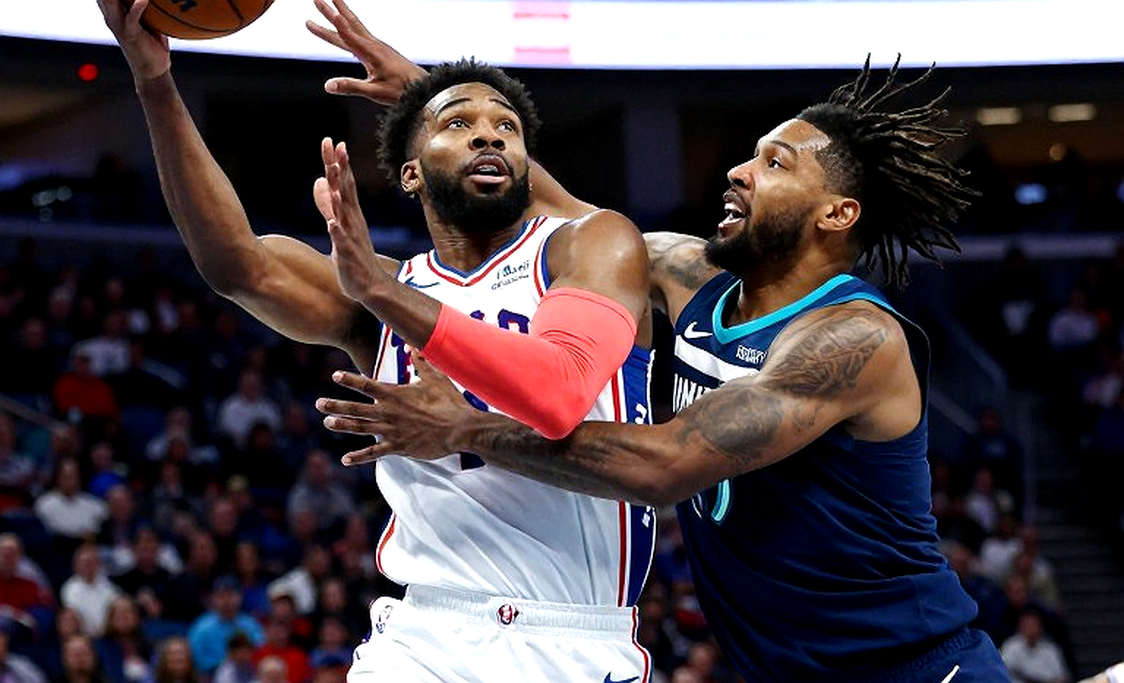
Nine new signings in one summer is not a normal number. It is not only a sporting matter. Every new contract means an upfront payment, an agent commission, and a multi-year commitment that must be amortised across the books. When you replace almost an entire roster in one transfer window, you are not just buying players — you are restructuring your entire repayment schedule.
Core: reading a press conference like a cost statement
Start with the player's own words. He says he has just joined the team, then seconds later says he has been here five years. For a reporter, that is a contradiction to untangle. For someone who audits data, it is a signal.
Two explanations are possible. Either the transcript was trimmed in editing and the two sentences belong to two different players, or the player himself is describing his own state: he has been here a long time, but the team around him is new. Both explanations lead to the same structural conclusion: Fenerbahce's continuity this season sits with the coaching staff, not with the locker room.
That is why the press conference did not open with tactics. It opened with "we need a year to gel." A very modest line, and also a very advantageous one in communications terms: if the team starts slowly, it is already on record. If the team starts fast, it becomes evidence of coaching quality.
Based on my experience watching EuroLeague games in recent seasons, I have noticed a fairly stable pattern among big-budget clubs: they do not lose because they lack talent, they lose because it takes two months for nine new signings to learn where to stand inside the defensive system. In the EuroLeague, the gap between fourth place and twelfth is usually decided by the number of mistimed rotations, not by the number of points scored.
The second quote matters more. The player says he has no clear idea of this team's ceiling. That is a safe statement to the point of suspicion. At a club that always declares its goal is to go all the way in every competition, a roster member saying "I don't know how far we can go" creates an information gap. That gap is not accidental.
Financially, there are three things I am tracking at Fenerbahce this season.
First, contract-term structure. When you sign nine players in one summer, you are almost certainly using a lot of short-term deals with one-way extension clauses. That type of clause lets the club keep the decision in its own hands, but it also lowers a player's resale value on the market.
Second, the wage-to-revenue ratio. Fenerbahce has EuroLeague broadcast revenue, ticket revenue, merchandise revenue and a naming-rights deal. But when the payroll grows faster than revenue, the gap has to be covered by owner money — and that money never appears in any annual report.
Third, payment structure. Big deals in Europe are usually split into instalments. A "three-million-euro" contract may be three hundred thousand paid now, with the rest stretched over three years. That makes a club's cash flow look healthier in the short term while making next season's pressure heavier.
A contract has an exit clause, but cash flow does not. That is the line I always come back to when a club turns over more than half its roster in one summer.
The contrarian angle: an answer nobody picked up
At the end of the press conference there was a question the original report did not spell out. All that remains is the answer: "I don't know, I really don't know. I had never thought about it. Actually I hope there is nobody like me — for the good of basketball, that would be best. That there is nobody like me is definitely better for basketball."
A laugh, and that was it.
Turkish media read this as a comic moment. I read it as something far more serious. If the question was about whether this player is the only one who survived multiple rounds of roster purges, then "I hope there is nobody like me" is not modesty. It is a truthful statement about the fatigue of an organisation that changes too fast.
Big clubs usually advertise turnover as a sign of ambition. But from the perspective of the one who stays, constant turnover is another kind of cost: the cost of relearning teammates' names, of rebuilding locker-room relationships, of rebuilding trust with the coaching staff. These costs never appear on the payroll. They appear on the scoreboard, two months later, when the team needs a win under pressure.

A player's value is printed on the court, but it is engraved on the payroll. And what is engraved cannot be laughed away.
The blind spot of the official story
Fenerbahce's official story this season is very tidy: new roster, old ambition, nine signings who need time to gel, and a goal of going all the way in every competition.
What goes unmentioned is the decision-making mechanism behind those nine contracts. Who owns recruitment? The coaching staff or the front office? How many of those deals contain clauses letting the club terminate unilaterally? How many agents took part in one transfer window, and how many commissions were folded into transfer fees?
These are not trick questions. They are the questions every European club must answer to comply with financial control rules. But they rarely surface at a press conference, because a press conference is designed to talk about emotion, not structure.
I do not predict the future; I only read the ledger ahead of time. And Fenerbahce's ledger this season has one line that stands out above the rest: the club is anchoring its stability to a coaching staff while anchoring everything else to short-term contracts. If the coaching staff leaves, almost that entire structure has to be rebuilt from scratch.
What to watch next
For me, Fenerbahce's record in the first month of the EuroLeague matters less than how many times they are forced to substitute in the fourth quarter of road games. That metric measures directly how well the nine new signings have integrated, and it is also the earliest indicator of whether the club will have to reopen the transfer market mid-season.
The summer transfer window is a battlefield; I am only the one counting bullets. And cash flow, as always, keeps moving in a single direction: toward whichever club controls the duration of its own contracts better.